
Introduction
Implementing IT Service Management (ITSM) on ServiceNow is not simply about deploying a tool, it is about transforming how IT delivers value to the business. Many organizations approach ServiceNow ITSM implementation roadmap with a configuration-first mindset, focusing on modules such as Incident, Change, or Request Management. However, without a structured roadmap that integrates both strategic alignment and disciplined delivery execution, these implementations often fail to realize their full potential.
A successful ServiceNow ITSM implementation roadmap must address three fundamental dimensions:
- Strategy: Aligning IT services with business objectives and defining measurable outcomes
- Delivery: Executing the implementation in structured phases with clear governance
- Value Stream Realization: Ensuring measurable ROI through KPIs and continuous improvement
Organizations that succeed in ServiceNow implementations treat it as a multi-phase transformation journey, not a one-time deployment. This article presents a comprehensive roadmap that balances strategy and delivery, while also providing practical examples, ROI insights, implementation timelines, and key performance indicators.
Why a Structured ServiceNow ITSM Implementation Roadmap is Critical
One of the most common reasons ServiceNow implementations underperform is the absence of a structured ITSM roadmap. Organizations often jump directly into configuration without understanding their current maturity, resulting in:
- Mis-aligned workflows
- Over-customization
- Poor user adoption
- Ineffective reporting
For example, a global enterprise implemented ServiceNow Incident Management without standardizing categorization or prioritization. As a result, reporting became inconsistent, SLA tracking was unreliable, and leadership lacked visibility into service performance.
A structured roadmap ensures:
- Alignment between IT and business priorities
- Standardization of processes
- Incremental delivery of value
- Controlled implementation risks
It also enables organizations to move from reactive service delivery to proactive service management, which is essential in today’s digital landscape.
Phase 1: Strategy & Assessment (2–4 Weeks)
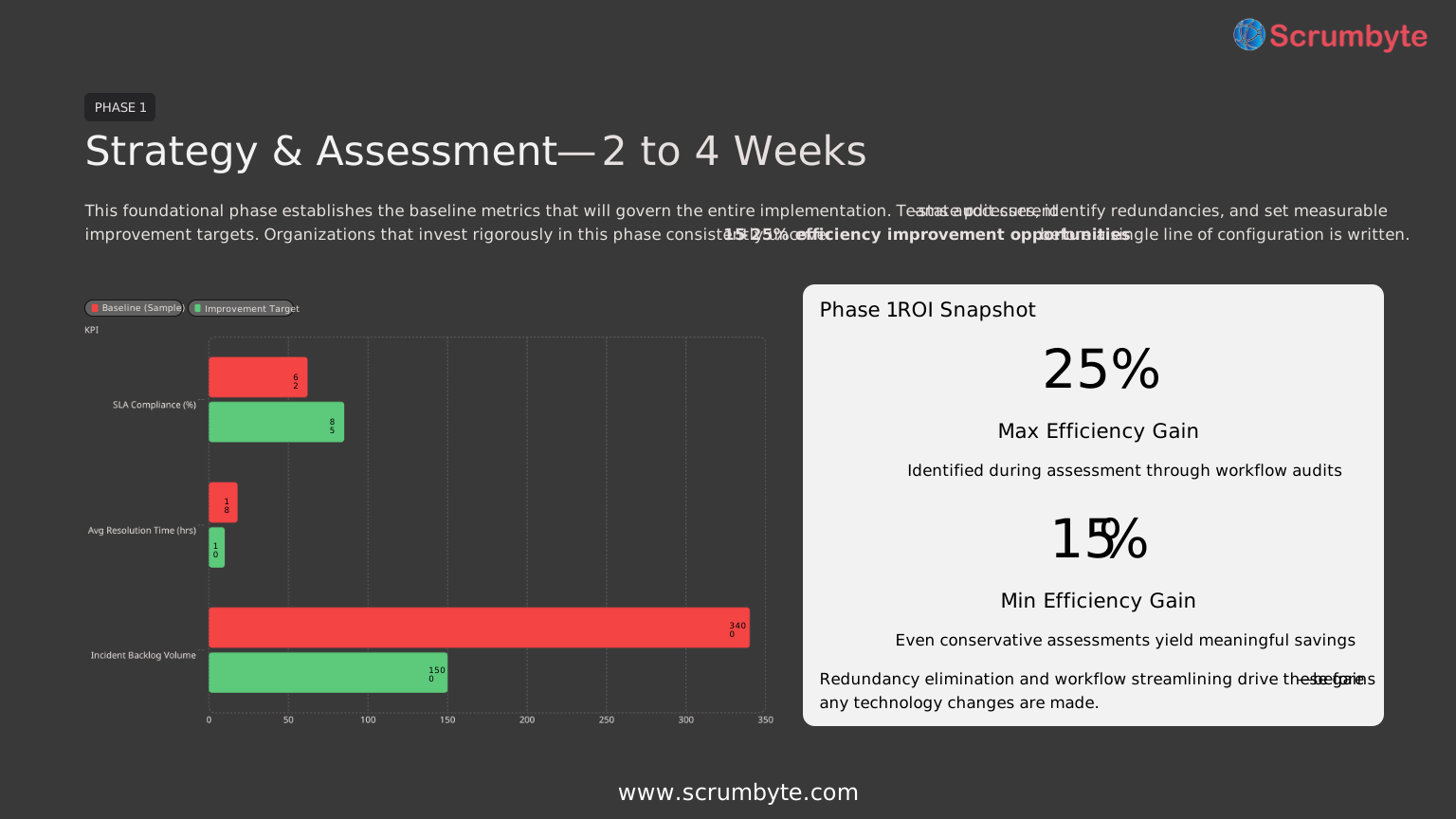
The first phase sets the foundation for the entire ServiceNow ITSM implementation roadmap. Skipping or rushing this phase is one of the biggest mistakes organizations make.
Objectives
- Assess current ITSM maturity
- Identify process inefficiencies
- Define business-aligned outcomes
Key Activities
- Stakeholder interviews across IT and business
- Assessment of current processes (Incident, Service Request, Change, Problem)
- Review of existing tools and integrations
- Identification of pain points and bottlenecks
Example
A retail organization discovered during assessment that:
- 40% of incidents were incorrectly categorized
- SLA definitions were inconsistent across teams
- Manual ticket assignment caused delays
This insight helped them prioritize automation and standardization in later phases.
Deliverables
- ITSM maturity assessment report
- ITSM Gap analysis document
- High-level transformation roadmap
KPIs Established
- Baseline ITSM SLA Management compliance
- Average resolution time
- Incident backlog volume
ROI Insight
Organizations typically identify 15–25% efficiency improvement opportunities during this phase alone by eliminating redundancies and streamlining workflows.
Phase 2: Design & Planning (3–6 Weeks)
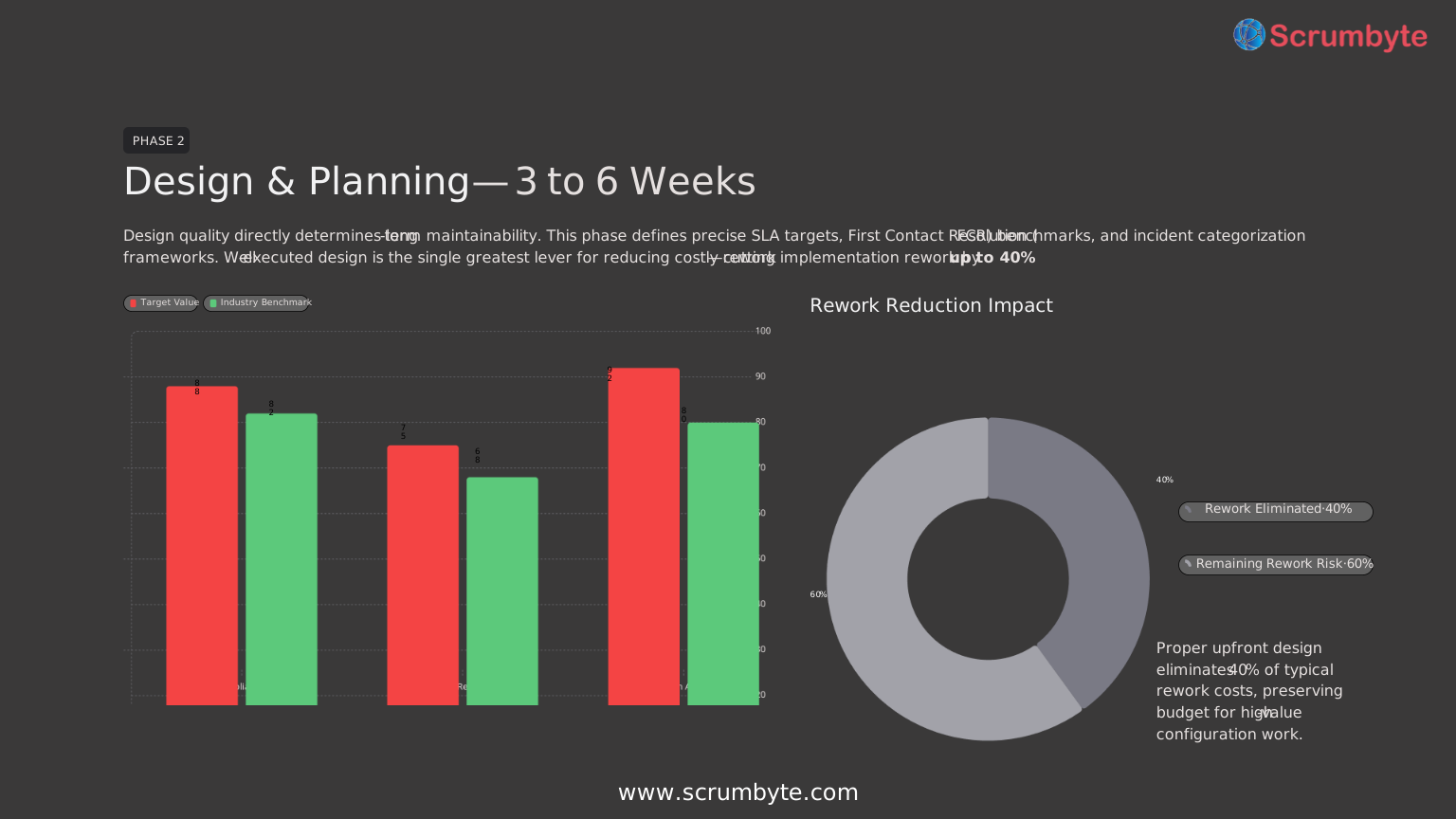
This phase translates strategy into a future-state operating model.
Objectives
- Define standardized ITSM processes
- Align with ITIL best practices
- Design ServiceNow architecture
Key Activities
- ITSM Process (re)design workshops
- SLA definition and tiering
- Service catalog structuring
- CMDB data model planning
Example
A banking client redesigned its Incident management process by:
- Introducing a standardized priority matrix
- Defining SLA tiers based on business impact
- Automating escalation rules
This reduced confusion and improved SLA adherence significantly.
Deliverables
- Process design documentation
- SLA and KPI framework
- Governance model
KPIs Defined
- Target SLA compliance (e.g., 85–90%)
- First Contact Resolution targets
- Incident categorization accuracy
ROI Insight
Proper design reduces implementation rework by up to 40% and ensures long-term maintainability.
Phase 3: Build & Configuration (6–10 Weeks)
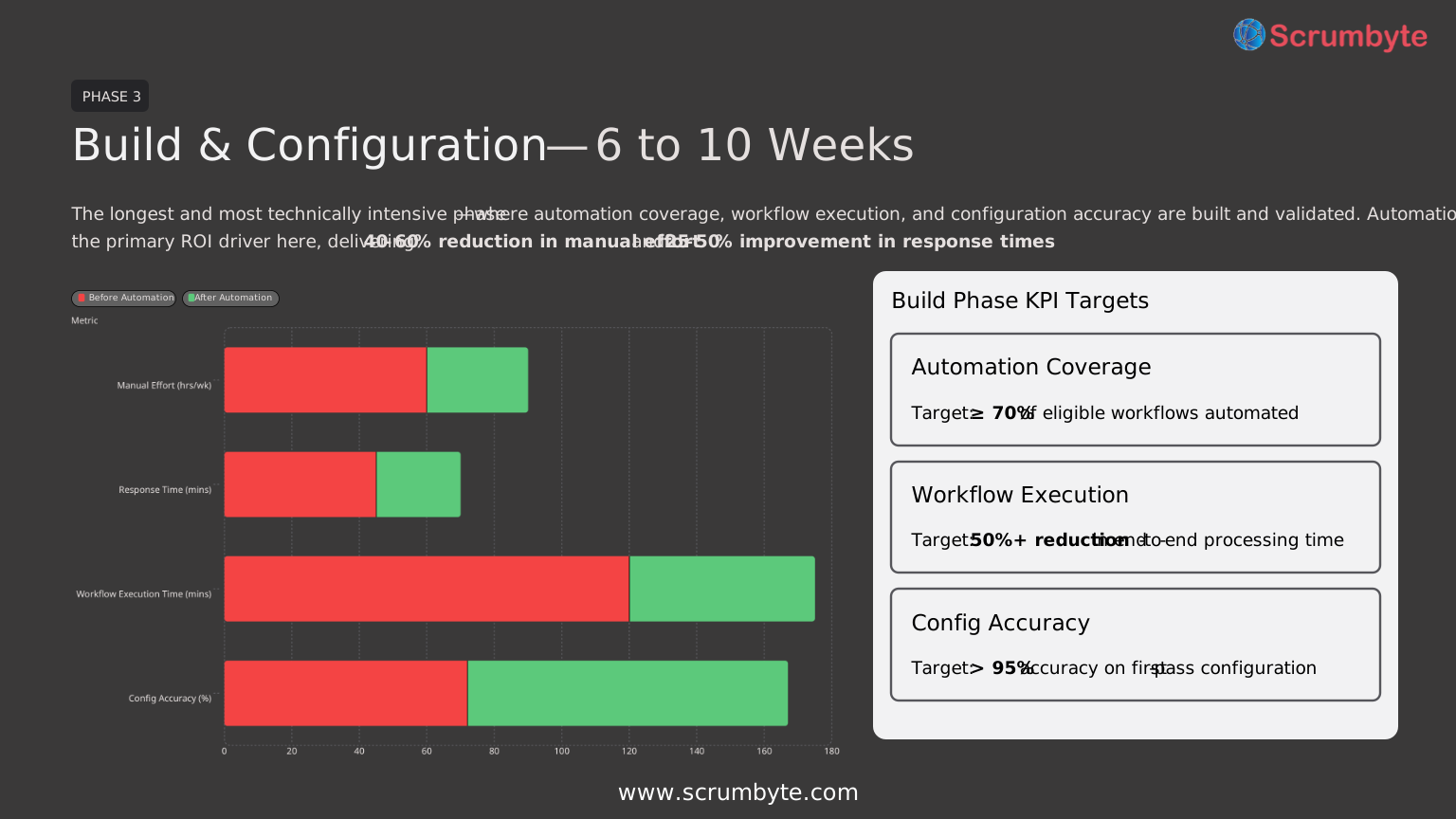
This is where the roadmap transitions into execution.
Objectives
- Configure ServiceNow modules
- Implement workflows and automation
- Integrate with enterprise systems
Key Activities
- Incident, Problem, Change management module configuration
- SLA engine setup
- Workflow automation using Flow Designer
- Integration with monitoring and email systems
Example
A telecom organization implemented:
- Automated incident creation from monitoring tools
- SLA-based escalation workflows
- Role-based dashboards for managers
This reduced manual intervention significantly.
Deliverables
- Configured ServiceNow instance
- Automated workflows
- Reporting dashboards
KPIs
- Automation coverage (%)
- Workflow execution time
- Configuration accuracy
ROI Insight
Automation typically results in:
- 40–60% reduction in manual effort
- 25–50% improvement in response times
Phase 4: Testing & Validation (2–4 Weeks)
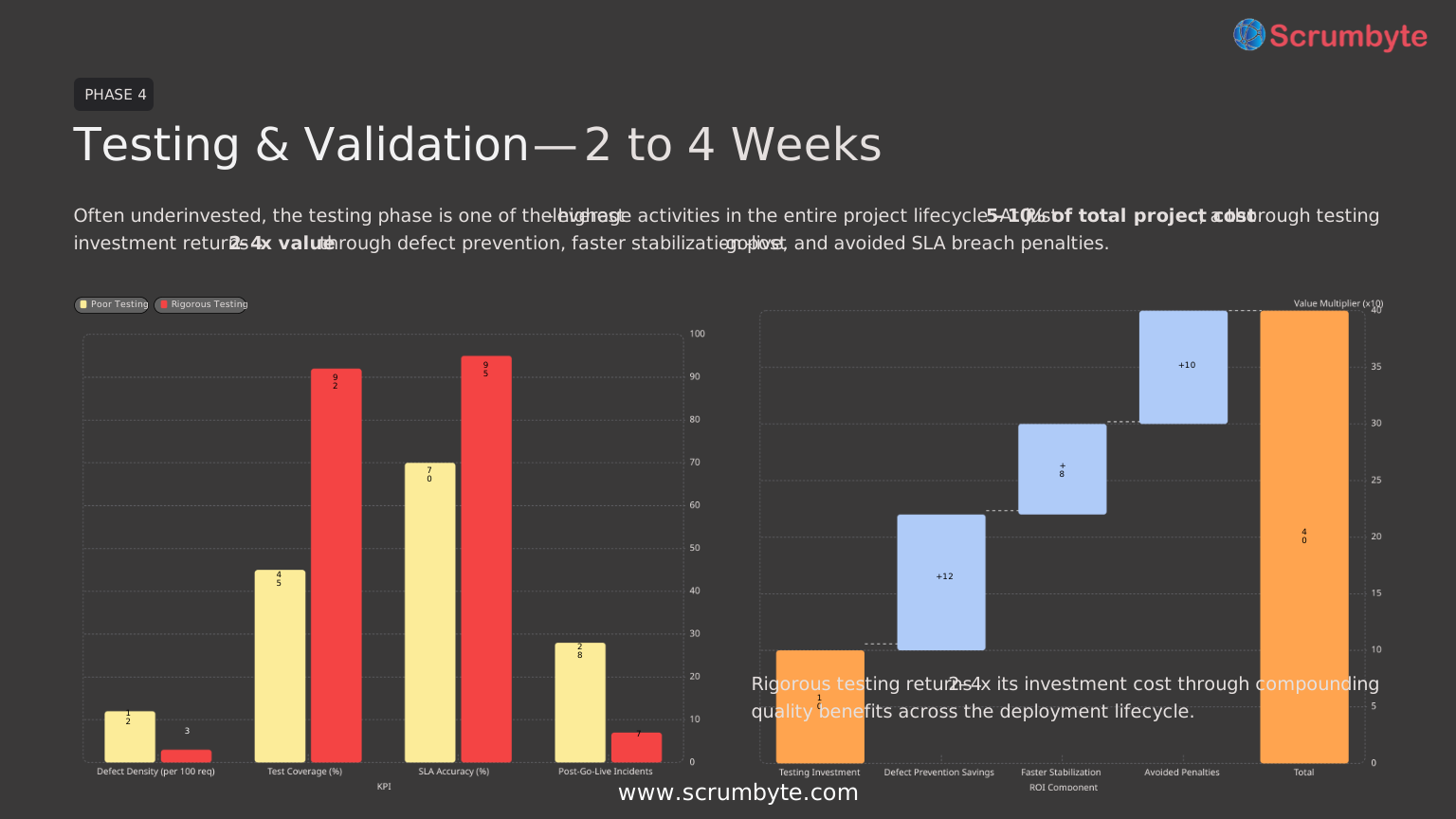
Testing ensures that the system performs as expected before go-live.
Objectives
- Validate workflows and SLAs
- Identify defects
- Ensure user readiness
Key Activities
- Unit testing
- User Acceptance Testing (UAT)
- SLA validation scenarios
Example
During testing, a manufacturing company identified:
- Incorrect SLA triggers when priority changed
- Workflow delays in escalation
Fixing these issues before go-live prevented major disruptions.
Deliverables
- Test reports
- Defect logs
- Approved solution
KPIs
- Defect density
- Test coverage
- SLA accuracy
ROI Insight
Reduced Cost of Defect Fixing
- Fixing defects in testing vs production: $1 vs $5–$10 (5–10x cheaper)
- Example: Identifying 50 defects in testing can save $5–10,000 in post-go-live rework
Lower Post-Go-Live Incidents
- Defect density reduced from 0.8 → 0.3 defects per test case
- Leads to 20–30% fewer production incidents in first 3 months
Improved Test Coverage = Lower Risk
- Increasing test coverage from 60% → 90%
- Reduces missed critical defects by ~40–50%
Higher SLA Accuracy
- SLA accuracy improved from 75% → 95%+
- Prevents incorrect SLA breaches and reporting errors
- Avoids potential penalty costs (e.g., $2–50,000/month in large enterprises)
Reduced Hypercare Effort
- Post-go-live support effort reduced by 25–40%
- Example: Hypercare duration reduced from 4 weeks → 2–3 weeks
Faster Time-to-Value
- Stable go-live enables full adoption within 2–4 weeks
- Avoids delays in realizing automation and efficiency benefits
Improved User Confidence & Adoption
- Fewer defects → smoother experience
- Adoption rates increase from 70% → 90%+ in first month
Overall ROI Impact
- Testing phase investment (~5–10% of project cost)
- Returns 2–4x value through reduced defects, faster stabilization, and avoided penalties
Phase 5: Deployment & Go-Live (1–2 Weeks)
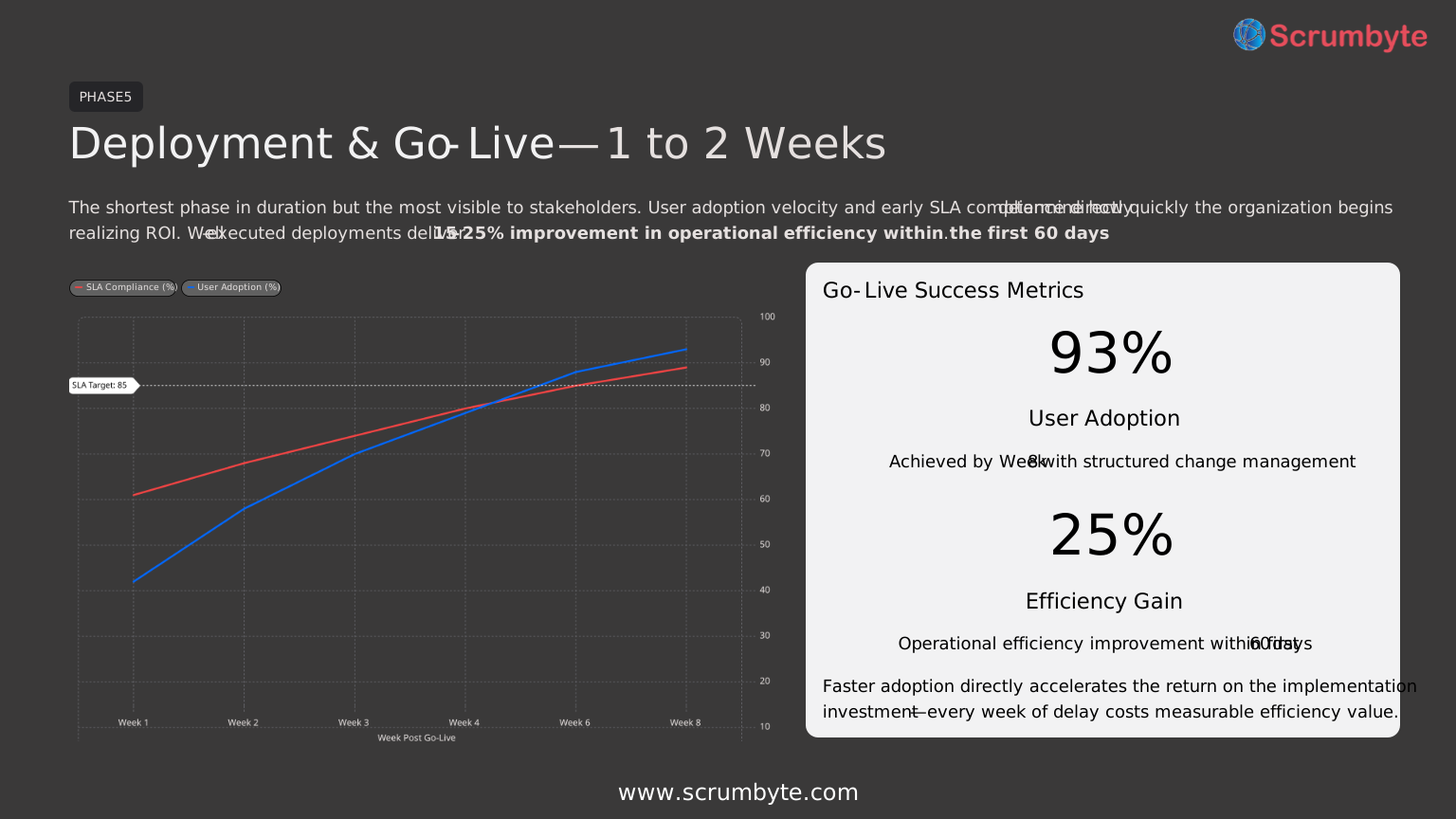
This phase transitions the solution into production.
Objectives
- Ensure smooth go-live
- Enable user adoption
- Monitor initial performance
Key Activities
- Data migration
- End-user training
- Hypercare support
Example
A healthcare organization trained over 200 users and achieved 90% adoption within the first month, leading to immediate improvements in service delivery.
KPIs
- User adoption rate
- Ticket volume trends
- Initial SLA compliance
ROI Insight
- Accelerated User Adoption = Faster Value Realization
- Adoption improved from 60% → 90% within first 4 weeks
- Example: 300 users onboarded → active usage increases from 180 → 270 users
- Leads to quicker realization of process efficiencies and tool ROI
- Stabilized Ticket Volume Trends
- Initial spike: +15–20% (due to better logging and visibility)
- Stabilization within 2–4 weeks → normalization and eventual 10–15% reduction
- Indicates improved process clarity and self-service adoption
- Improved Initial SLA Compliance
- SLA compliance increases from 65% → 80–85% in first month
- Early gains driven by:
- Standardized workflows
- Automated routing
- Clear prioritization
- Reduced Manual Workload
- Automation at go-live reduces manual effort by 20–30%
- Example: Ticket assignment time drops from 15 mins → 3–5 mins
- Lower Hypercare and Support Costs
- Well-managed go-live reduces hypercare effort by 25–35%
- Example: Support team size reduced from 10 → 6–7 resources
- Faster Operational Stabilization
- Time to steady-state operations reduced from 6–8 weeks → 3–4 weeks
- Enables earlier transition to continuous improvement phase
- Improved Data Quality from Day One
- Structured logging increases categorization accuracy from 50% → 85%+
- Leads to better reporting and decision-making
- Overall ROI Impact
- Early-stage benefits deliver 15–25% improvement in operational efficiency within first 60 days
- Faster adoption + improved SLA compliance = quicker return on implementation investment
Phase 6: Continuous Improvement (Ongoing)
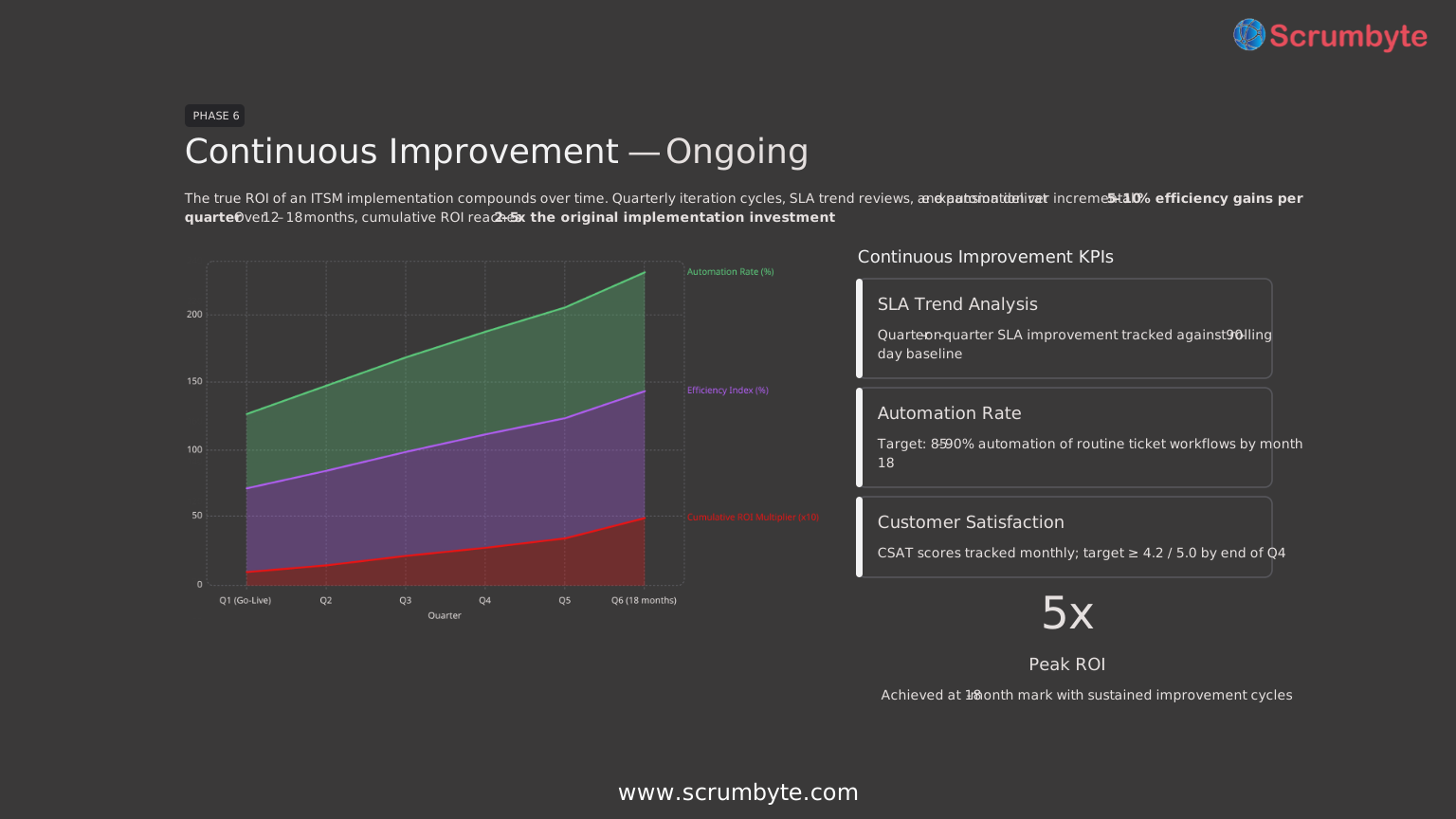
The most critical phase for long-term success.
Objectives
- Optimize processes
- Enhance automation
- Improve service quality
Key Activities
- KPI reviews
- Process refinement
- AI integration
Example
Post-implementation improvements resulted in:
- 35% reduction in SLA breaches
- 28% improvement in resolution time
KPIs
- SLA trend analysis
- Automation rate
- Customer satisfaction
ROI Insight
- SLA Trend Optimization = Sustained Performance Gains
- SLA compliance improves from 85% → 92–95% over 3–6 months
- Reduction in SLA breaches by 30–50%
- Example: Monthly breaches drop from 120 → 60
- Leads to fewer escalations and avoidance of penalty costs (₹3–8 lakhs/month in large setups)
- Increased Automation Rate = Cost Efficiency at Scale
- Automation rate improves from 25% → 55–65%
- Example: 10,000 monthly tickets → 6,000 handled automatically
- Reduces manual effort by 40–60%
- Annual savings: ₹20–50 lakhs depending on scale
- Improved Customer Satisfaction (CSAT) = Business Value
- CSAT increases from 3.8 → 4.5+ / 5
- Complaint rates drop by 25–40%
- Higher satisfaction drives:
- Better user adoption
- Reduced shadow IT
- Improved business trust in IT
- Reduced Ticket Volumes Through Optimization
- Continuous improvements + automation reduce ticket volume by 15–25%
- Example: 10,000 tickets/month → 7,500–8,500 tickets
- Faster Resolution Times
- MTTR improves from 6 hours → 3.5–4 hours
- Leads to increased productivity across business teams
- Data-Driven Decision Making
- SLA trends and analytics enable:
- Proactive problem management
- Capacity planning
- Reduces recurring incidents by 20–30%
- SLA trends and analytics enable:
- Compounding ROI Over Time
- Continuous improvement delivers incremental 5–10% efficiency gains quarter-on-quarter
- Overall ROI increases to 2–5x over 12–18 months
- Strategic Impact
- IT shifts from:
- Reactive support → Proactive service management → Predictive operations
- Positions IT as a business enabler rather than a cost center
- IT shifts from:
KPI Framework for ServiceNow ITSM
A robust KPI framework ensures continuous measurement and improvement.
Operational KPIs
- Response time
- Resolution time
Performance KPIs
- SLA compliance %
- Service availability
Experience KPIs
- CSAT scores
- User feedback
Predictive KPIs
- SLA breach prediction
- Incident trend forecasting
ROI of ServiceNow ITSM Implementation roadmap
Cost Reduction
- 20–40% reduction in manual effort
- 15–30% reduction in operational costs
Productivity Gains
- Faster resolution times
- Improved team efficiency
Business Impact
- Reduced downtime
- Enhanced customer satisfaction
Example ROI Scenario
Before implementation:
- Resolution time: 8 hours
- SLA compliance: 60%
After implementation:
- Resolution time: 4.5 hours
- SLA compliance: 85%
This resulted in:
- 40% efficiency improvement
- Significant cost savings
ServiceNow ITSM Implementation Roadmap Timeline
| Phase | Duration |
| Strategy | 2–4 weeks |
| Design | 3–6 weeks |
| Build | 6–10 weeks |
| Testing | 2–4 weeks |
| Go-Live | 1–2 weeks |
Total duration: 14–26 weeks
Key Points to Ponder
- Avoid over-customization; leverage out-of-the-box features
- Focus on process before tool configuration
- Ensure stakeholder alignment
- Invest in data quality (especially CMDB)
- Plan for change management and adoption
Future Trends in ServiceNow ITSM
The future of ServiceNow ITSM is being decisively shaped by the convergence of artificial intelligence, automation, and enterprise-wide workflow integration—elevating traditional service management from an operational function to a strategic business capability.
For IT leadership, this represents a shift toward intelligent, self-optimizing service ecosystems where AI is not merely augmenting human effort but increasingly driving autonomous resolution. Advanced capabilities such as intelligent ticket classification, predictive incident detection, and automated routing are already delivering measurable gains in efficiency, significantly reducing manual intervention and accelerating resolution cycles.
More importantly, the emergence of AI agents and generative AI is enabling real-time, context-aware decision-making, allowing organizations to anticipate and mitigate issues before they impact business operations. This transition from reactive support to proactive and predictive service delivery is redefining performance benchmarks, enhancing both operational resilience and end-user experience at scale.
In parallel, ServiceNow is evolving into a platform-centric, enterprise workflow engine, extending far beyond IT into core business functions such as HR, finance, and customer operations. This shift enables organizations to adopt a unified workflow architecture, positioning ITSM as the backbone of digital operations and facilitating seamless, end-to-end visibility across the enterprise.
The growing adoption of low-code and no-code capabilities further accelerates this transformation by empowering business stakeholders to design and adapt workflows with minimal dependency on IT, thereby increasing agility and reducing time-to-value.
Looking ahead, the emphasis will increasingly move toward experience-driven metrics (XLAs), real-time analytics, and outcome-based service management, where success is defined not just by SLA compliance but by tangible business impact and user satisfaction. Collectively, these trends underscore the evolution of ServiceNow ITSM into an intelligent, autonomous, and business-aligned platform, positioning it as a critical enabler of enterprise-wide transformation and sustained competitive advantage.
The following is a good representation of where the trends are converging to:
- AI-driven SLA breach prediction
- Intelligent automation
- Real-time dashboards
- DevOps integration
- Outcome-based SLAs
Final Insight
A ServiceNow ITSM implementation roadmap is not just about deploying technology – it is about building a scalable, efficient, and value-driven service management ecosystem.
Organizations that succeed:
- Balance strategy and execution
- Focus on measurable outcomes
- Continuously evolve
How Scrumbyte Can Help
A successful ServiceNow ITSM implementation roadmap goes beyond configuration—it requires the right mix of process design, SLA alignment, and execution.
At Scrumbyte, our ServiceNow ITSM consulting services focus on delivering measurable outcomes. We combine *ITSM maturity assessment and gap analysis, **ITSM process consulting, and end-to-end *ServiceNow implementation services to build scalable, high-performing ITSM environments.
From reducing SLA breaches to improving resolution times, we help you turn your ServiceNow investment into real business value.
Looking for outcome-driven ServiceNow ITSM consulting? Contact us to know more.

Vijay Chander is the founder of Scrumbyte, and is a senior IT strategy and service management consultant with over 30 years of global experience across Fortune 100 organizations including Microsoft, Caterpillar, First Data and SWIFT. He has led large-scale enterprise transformations spanning ITSM, architecture, product development, and managed services
Comments are closed